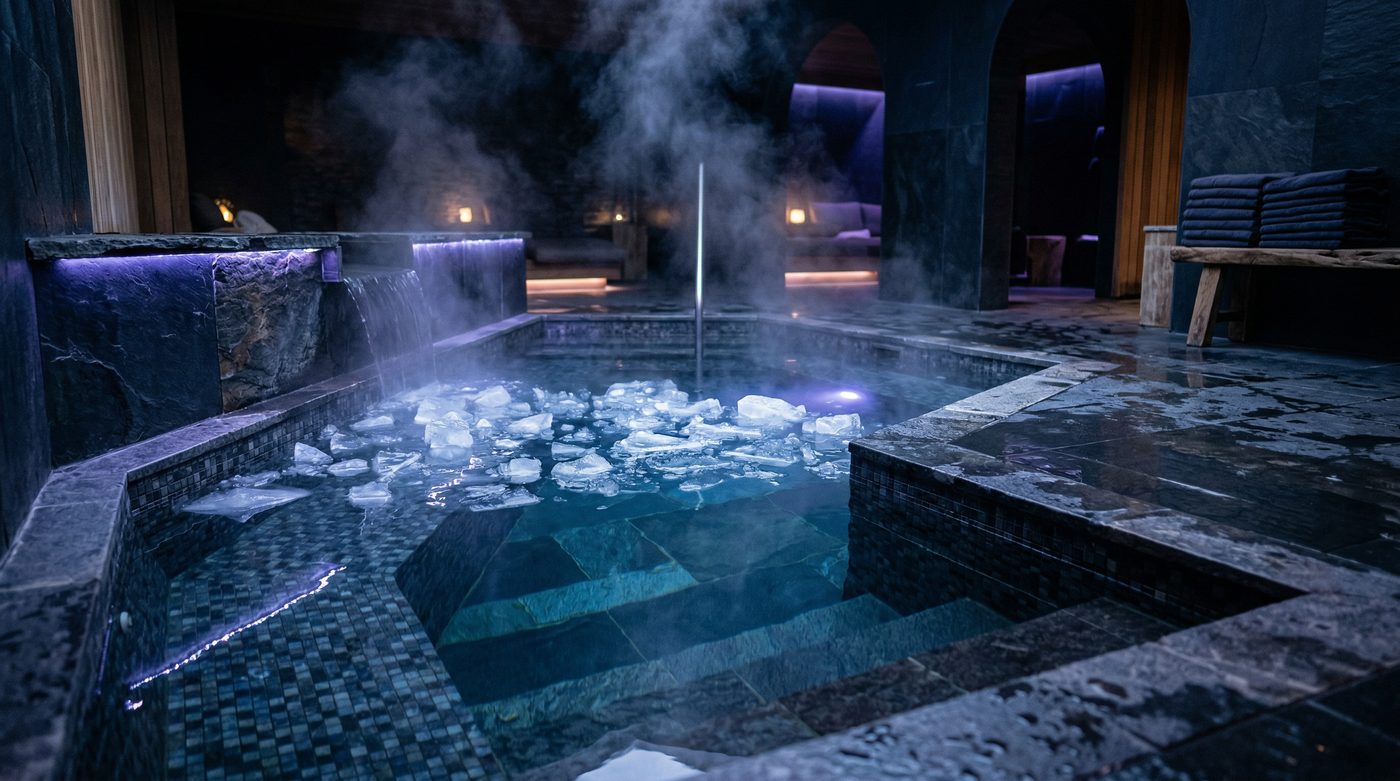
Cold plunge therapy has gone from an athlete's edge to a mainstream wellness trend — and that trajectory has created both opportunity and confusion for practitioners. The science is real, but it's more nuanced than the Instagram posts suggest. Here's what the evidence actually supports and how to implement it in clinical practice.
The Physiology of Cold Exposure
When the body is immersed in cold water (typically 38-59°F / 3-15°C), it triggers a cascade of physiological responses that have both immediate and adaptive effects.
Immediate Responses
- Sympathetic nervous system activation: Norepinephrine release increases 2-3x within minutes, enhancing alertness, mood, and attention. This is the mechanism behind the well-documented mood and cognitive benefits.
- Vasoconstriction and redistribution: Blood flow shifts from periphery to core, followed by reactive vasodilation upon rewarming. This "vascular pumping" may accelerate metabolite clearance.
- Anti-inflammatory signaling: Cold exposure reduces circulating inflammatory cytokines (IL-6, TNF-alpha) and activates cold-shock proteins that play roles in cellular stress response.
- Endorphin and dopamine release: Cold immersion triggers endogenous opioid release and a sustained dopamine elevation (up to 250% above baseline lasting 2-3 hours), per research from the European Journal of Applied Physiology.
Adaptive Responses (With Repeated Exposure)
- Brown adipose tissue activation: Regular cold exposure upregulates thermogenic brown fat, improving metabolic health markers and potentially supporting body composition goals.
- Improved cold tolerance: Habituation reduces the stress response over time, meaning the cardiovascular strain decreases with consistent practice.
- Enhanced vagal tone: Regular cold exposure has been associated with improved heart rate variability (HRV), a marker of autonomic nervous system health.
What the Evidence Supports — and Doesn't
The literature on cold water immersion (CWI) is substantial but inconsistent, largely because protocols vary enormously across studies. Here's the current state of evidence:
Strong Evidence
- Reduced perceived soreness: CWI after exercise consistently reduces subjective ratings of muscle soreness (DOMS) across multiple meta-analyses.
- Mood and cognitive benefits: The norepinephrine and dopamine response is well-documented and consistent across populations.
- Acute inflammation reduction: CWI reduces inflammatory markers in the short term, which can be beneficial for recovery between competitions or high-intensity training blocks.
Mixed or Nuanced Evidence
- Muscle hypertrophy: CWI after resistance training may blunt the anabolic signaling cascade (mTOR pathway) required for muscle growth. A 2015 study in the Journal of Physiology showed reduced satellite cell activity and muscle protein synthesis when CWI was applied post-strength training. This suggests cold plunge may be counterproductive during hypertrophy-focused training phases.
- Long-term strength adaptation: The evidence here is conflicting. Some studies show no negative effect on strength gains; others suggest interference. The timing and context matter enormously.
- Injury recovery: For acute soft tissue injuries, the evidence for cryotherapy in general has weakened significantly. The old RICE protocol has given way to more nuanced approaches.
Clinical Application: A Protocol Framework
For practitioners integrating cold plunge into their clinical toolkit, here's an evidence-informed framework:
When to Use Cold Plunge
- Between competitions or games when reducing perceived soreness takes priority over long-term adaptation
- During high-stress training phases for parasympathetic activation and sleep quality
- As a mental resilience tool — the psychological benefits of voluntary cold exposure are consistently reported and shouldn't be dismissed
- For metabolic health goals where brown fat activation and improved insulin sensitivity are targets
When to Avoid or Time Carefully
- Immediately after strength training when hypertrophy is the primary goal — wait at least 4-6 hours
- During acute inflammatory phases of healing where the inflammatory response is necessary for tissue repair
- For patients with cardiovascular risk factors — the sympathetic surge requires appropriate screening
Implementation in Practice
At Tidal Wave Wellness, cold plunge is one component of an integrated recovery protocol — not a standalone intervention. It's prescribed with the same clinical reasoning as exercise dosage: specific parameters, specific timing, specific goals.
TWI 204: Recovery Science covers cold exposure alongside heat therapy, sleep optimization, and recovery periodization — building the full clinical toolkit for evidence-based recovery programming.
Ready to Go Deeper?
This article scratches the surface. The full curriculum goes much further.
Explore TWI 204: Recovery Science